Whether you're wrestling with a complex philosophical argument, debugging a line of code, or designing a cutting-edge digital circuit, the ability to define and verify logical statements is paramount. This isn't just about "being logical"—it's about using a precise, unambiguous language that computers, philosophers, and mathematicians all understand. That's where Symbol Generator Logic & Tools come in, empowering you to build solid proofs and analyze intricate expressions with unmatched clarity and efficiency.
Imagine being able to instantly see every possible outcome of a logical statement, confirming its truth or identifying its flaws. That's the power we're about to unpack.
At a Glance: Harnessing Logic with Symbol Generators
- Logical symbols are your toolkit for expressing complex ideas with absolute precision, transcending natural language ambiguities.
- Truth tables are the bedrock for verifying logical statements, revealing all possible outcomes and ensuring validity.
- Symbol generators automate complexity, turning daunting manual truth table construction into a swift, accurate process.
- Beyond theory, these tools are practical, indispensable for computer science, mathematics, electronics design, and philosophical argumentation.
- Mastering the logic behind the symbols empowers you to build robust systems and compelling arguments, making you a more effective problem-solver.
The Unseen Language of Precision: Why Logic Symbols Matter
In a world filled with nuance and misinterpretation, formal logic offers a beacon of clarity. It provides a universal language for reasoning, allowing us to represent thoughts, conditions, and relationships with exactitude. When we talk about "Symbol Generator Logic & Tools," we're really discussing the power to not just understand this language, but to wield it effectively, especially when faced with intricate arguments or system designs.
Think of it like architectural blueprints for your thoughts. Instead of vague sketches, you have precise diagrams that anyone trained in the discipline can read and verify. This is crucial for:
- Building robust software: Ensuring your code behaves exactly as expected under all conditions.
- Designing reliable hardware: Creating circuits that perform specific functions without error.
- Constructing irrefutable arguments: Proving theorems or philosophical points beyond reasonable doubt.
- Learning and teaching logic: Visualizing complex concepts in an accessible way.
The elegance of logical symbols lies in their brevity and universal meaning. A single symbol can encapsulate a relationship that might take several words or even sentences to explain in everyday language.
Decoding the Alphabet of Logic: Key Symbols & Their Power
Before we dive into how a symbol generator works its magic, let's get acquainted with the fundamental building blocks: the logical symbols themselves. These are the characters and operators you'll input into a generator, and understanding them is key to interpreting the results.
The Connectives: How Ideas Link Up
These symbols allow us to combine or modify statements, forming more complex expressions.
- ∧ (Logical AND): Reads "P and Q." True only if both P and Q are true.
- Example: "It is raining ∧ I have an umbrella."
- ∨ (Logical OR): Reads "P or Q." True if at least one of P or Q is true (inclusive OR).
- Example: "I will eat pizza ∨ I will eat pasta."
- ¬ (Logical NOT): Reads "not P." Reverses the truth value of P.
- Example: "¬It is cold" means "It is not cold."
- → (Logical IMPLIES / Conditional): Reads "If P, then Q" or "P implies Q." False only if P is true and Q is false.
- Example: "If you study hard → you will pass the exam."
- ↔ (Logical BICONDITIONAL): Reads "P if and only if Q" or "P is equivalent to Q." True when P and Q have the same truth value.
- Example: "I will go ↔ you go."
- ⊕ (Exclusive OR / XOR): Reads "P XOR Q." True if P and Q have different truth values.
- Example: "You can have coffee ⊕ you can have tea (but not both)."
- ⊼ (NAND): Reads "Not (P AND Q)." True in all cases except when both P and Q are true.
- Example: "¬(It is Monday ∧ I am happy)."
- ⊽ (NOR): Reads "Not (P OR Q)." True only when both P and Q are false.
- Example: "¬(I like apples ∨ I like oranges)."
- ⊃ (Material Implication): Often used interchangeably with → (implies) in classical logic, representing "if...then..."
- ≡ (Material Equivalence): Often used interchangeably with ↔ (biconditional), representing "if and only if."
Quantifiers: Speaking About "All" and "Some"
Quantifiers allow us to make statements about entire collections or categories of things.
- ∀ (Universal Quantifier / FOR ALL): Reads "For all x..." or "For every x..."
- Example: ∀x(P(x)) – "For all x, P(x) is true."
- ∃ (Existential Quantifier / THERE EXISTS): Reads "There exists an x..." or "For some x..."
- Example: ∃x(P(x)) – "There exists an x such that P(x) is true."
- ∃! (Unique Existential): Reads "There exists a unique x..."
- Example: ∃!x(P(x)) – "There exists one and only one x such that P(x) is true."
Beyond Basic Truth: Modal Logic & Proofs
These symbols extend logic into concepts of necessity, possibility, and formal derivability.
- □ (Necessarily): Reads "Necessarily P" or "It is necessary that P."
- ◇ (Possibly): Reads "Possibly P" or "It is possible that P."
- ⊢ (Entails / Provable): Indicates that a conclusion can be derived from a set of premises within a proof system.
- Example: Γ ⊢ φ – "From premises Γ, φ is provable."
- ⊨ (Semantically Entails): Indicates that a conclusion is true whenever the premises are true. This is about truth preservation, not formal derivation.
- Example: Γ ⊨ φ – "Γ semantically entails φ."
Organizing Collections: Set Theory Symbols
While not strictly logical operators, these symbols are fundamental in mathematical and logical contexts where collections of elements are involved.
- ∈ (Element of): Reads "x is an element of A."
- ⊂ (Subset): Reads "A is a subset of B" (meaning all elements of A are in B).
- ∪ (Union): Combines elements from two sets.
- ∩ (Intersection): Contains elements common to both sets.
- ∖ (Set Difference): Contains elements in the first set but not the second.
- △ (Symmetric Difference): Contains elements in either set, but not both.
The Finishing Touches: Punctuation & Markers
These symbols help structure and conclude logical arguments and proofs.
- ∴ (Therefore): Used to introduce a conclusion.
- ∵ (Because): Used to introduce a premise or reason.
- ∎ (QED / End of Proof): Marks the successful completion of a proof, from the Latin "Quod Erat Demonstrandum" (what was to be shown).
Understanding these symbols is the first step. The next is to see how they interact and how their truth values are determined, which brings us to the power of truth tables.
Truth Tables: The Ultimate Logic Verifier
If logical symbols are the language, truth tables are the grammar—the set of rules that define how those symbols combine and what the outcome means. A truth table is a comprehensive chart that systematically displays every possible truth value combination for the inputs of a logical expression, along with the resulting output.
Imagine you have a complex switchboard with multiple buttons and indicator lights. A truth table maps out what lights will turn on for every single combination of button presses.
Key characteristics of truth tables:
- Binary Values: They operate on binary values: '1' for true, '0' for false (or 'True' and 'False' in Boolean representation).
- Exhaustive Outcomes: For
ninput variables, a truth table will always have2ⁿrows, ensuring every possible scenario is covered. For instance, an expression with 3 variables (P, Q, R) will have2³ = 8rows. - Clear Visibility: Each row represents a unique input combination, and the final column reveals the expression's overall truth value for that specific input.
Why are truth tables so crucial? - Verification: They provide irrefutable proof of an expression's validity or invalidity. You can literally see if a statement is a tautology (always true), a contradiction (always false), or contingent (true in some cases, false in others).
- Design & Debugging: In computer science and electronics, truth tables are indispensable for designing digital circuits (logic gates) and debugging logical errors in algorithms.
- Clarity: They demystify complex logical statements, breaking them down into manageable, verifiable parts.
- Equivalence Testing: You can compare two different logical expressions side-by-side in truth tables to see if they are logically equivalent (i.e., always produce the same output for the same inputs).
Boolean Logic in Action: Gates and Expressions
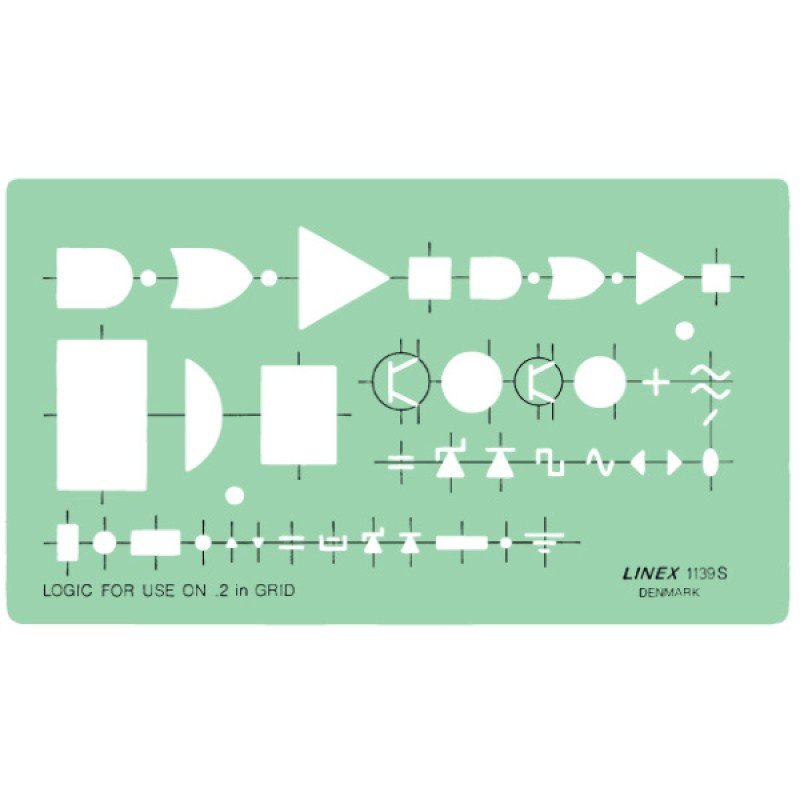
The symbols and truth tables we've discussed aren't just academic exercises; they form the bedrock of Boolean algebra, which is the mathematical foundation of digital circuits and computer operations. Every "0" and "1" zipping through your phone or computer is a reflection of these simple, elegant logical principles.
Here's how some common logic operators translate into Boolean expressions and conceptual "gates" in hardware:
- AND gate (Y = A·B or Y = A && B):
- Output (Y) is true (1) only if all inputs (A, B) are true (1).
- OR gate (Y = A + B or Y = A || B):
- Output (Y) is true (1) if at least one input (A, B) is true (1).
- Output is false (0) only when all inputs are false (0).
- NOT gate (Y = A′ or Y = ¬A or Y = !A):
- An inverter. Gives the opposite of the input. True (1) becomes false (0), false (0) becomes true (1).
- NAND gate (Y = (A ↑ B) or Y = (A·B)′ or Y = !(A && B)):
- The opposite of AND. Output is false (0) only when all inputs are true (1). Otherwise, it's true.
- NOR gate (Y = (A ↓ B) or Y = (A + B)′ or Y = !(A || B)):
- The opposite of OR. Output is true (1) only when all inputs are false (0). Otherwise, it's false.
- XOR (Exclusive OR) gate (Y = A ⊕ B or Y = A ^ B):
- Output is true (1) only when inputs are different (one 0 and one 1).
- XNOR (Exclusive NOR) gate (Y = (A ⊕ B)′ or Y = A ⊙ B or Y = (A == B)):
- Output is true (1) only when inputs are the same (both 0 or both 1).
- Implication (Y = A ⇒ B):
- Connects two statements (A and B). It is false only when A is true but B is false.
- Biconditional (Y = A ↔ B):
- Connects two statements (A and B). It is true when both A and B have the same truth value (both true or both false).
These fundamental operations, derived from logical principles, allow us to build incredibly complex systems, from simple calculators to advanced artificial intelligence. The elegance lies in reducing every decision to a series of true/false evaluations.
Your Personal Logic Assistant: How a Symbol Generator Tool Works
Manually constructing truth tables for expressions with many variables can be tedious and prone to human error. This is precisely where a dedicated "Symbol Generator Logic & Tools" application—often an online truth table generator—becomes an invaluable asset. It automates the heavy lifting, allowing you to focus on the meaning of the logic rather than the mechanics of calculation.
Imagine you're trying to figure out if (P ∧ Q) → ¬R is always true, sometimes true, or never true. Manually, you'd need to list out 8 rows (2³), calculate P∧Q for each, then ¬R, and finally the implication. A generator does this in milliseconds.
Step-by-Step: From Expression to Insight
The process of using an online truth table generator is typically straightforward:
- Craft Your Expression:
- Input: Enter your logical expression into the designated field. You'll use supported symbols for operators (like
∧or&&for AND,∨or||for OR,¬or!for NOT) and variables (usually any letter from A to Z, case-insensitive). - Structure: Parentheses are critical for defining the order of operations, just like in algebra. Nested expressions are fully supported, so
(A ∧ (B ∨ C)) → ¬Dis perfectly valid. - Constants: You can even use direct constant values (1 for true, 0 for false) within your expression.
- Comparison: If you want to compare multiple expressions, simply separate them with a comma (e.g.,
P → Q, ¬P ∨ Q).
- Hit "Generate":
- Once your expression is entered correctly, click the "Generate" or "Calculate" button. The tool will process the input, identify all variables, and systematically build the truth table.
- Interpret the Output:
- The results are typically displayed in a clear, tabular format. You can often choose to view the outputs in either Binary (1s and 0s) or Boolean (True/False) format, depending on your preference or the context of your work.
- Analyze & Understand:
- Examine the generated table. Look for patterns, identify rows where the expression is true or false, and verify your expected outcomes. This analysis is where the real learning and problem-solving happen.
Key Features That Elevate Your Workflow
A robust symbol generator for logic offers more than just basic truth tables:
- Comprehensive Symbol Support: It should recognize a wide array of logical operators and their common alternative notations (e.g.,
&for AND,|for OR,~for NOT). A built-in "cheat sheet" is a massive plus for quick reference. - Nesting and Precedence Handling: Accurately processes complex expressions with multiple levels of parentheses, respecting the established order of operations.
- Multiple Expression Comparison: The ability to generate truth tables for several expressions simultaneously, making it easy to compare their logical equivalence.
- Output Flexibility: Choice between binary (1s/0s) and Boolean (True/False) results.
- Sharing & Persistence: Many tools allow you to generate a unique URL for your specific expression and settings, making it easy to share your work or revisit it later. You might even find tools that help you create your custom symbol for niche logical notations, adding a layer of personalization to your analysis.
- Device Agnosticism: Functionality across various devices (desktops, tablets, smartphones) ensures you can work wherever you are.
- Scalability: No practical limit on the number of input variables, though computation time and table size increase exponentially (
2ⁿ).
Navigating Common Pitfalls: "Invalid Syntax" and Beyond
The most common hurdle users face is an "Invalid Syntax" error. This almost always means there's a typo, an unsupported symbol, or incorrect operator placement. Always refer to the tool's built-in cheat sheet for accepted symbols and syntax. Common errors include:
- Missing parentheses for complex sub-expressions.
- Using a symbol the generator doesn't recognize (e.g.,
^for AND instead of&&or∧). - Variables not being single letters (if that's a tool's restriction).
- Forgetting an operator between two variables (e.g.,
ABinstead ofA ∧ B).
By paying close attention to these details, you'll ensure a smooth experience and accurate results from your logic symbol generator.
Beyond Verification: Building Proofs and Designing Systems
The utility of symbol generator logic and tools extends far beyond simply checking homework. They are powerful instruments for:
Formal Proof Construction
When engaging in formal proofs in mathematics, philosophy, or computer science, you often need to demonstrate that an argument is logically valid. This means proving that if the premises are true, the conclusion must also be true.
- Law of Excluded Middle: A classic example is
⊢ P ∨ ¬P(P or not P). A truth table quickly confirms this statement is always true (a tautology). - Logical Implication: For an expression like
P ∧ Q → R, a generator can help you identify precisely which conditions make this implication true or false. This is vital for understanding the flow of an argument. - Equivalence Proofs: Showing that
P → Qis logically equivalent to¬P ∨ Qis easily done by generating truth tables for both expressions and observing identical output columns. This helps simplify complex logical statements into more manageable forms.
Digital Circuit Design
Every microchip, from your smart fridge to a supercomputer, relies on meticulously designed digital circuits built from logic gates (AND, OR, NOT, etc.).
- Specification to Circuit: Engineers often start with a desired logical behavior (e.g., "The alarm should sound IF the door is open AND the system is armed"). This translates directly into a Boolean expression.
- Truth Table as Blueprint: The truth table for that expression then becomes the blueprint for building the physical circuit using combinations of logic gates. A symbol generator allows designers to rapidly test and iterate on their logical designs before committing to hardware.
- Minimization: Truth tables can also help in simplifying Boolean expressions, leading to more efficient (fewer gates, less power) circuit designs.
Debugging and Validation in Programming
Programmers constantly deal with conditional logic (if-then-else, AND, OR, NOT). Misplaced && or || operators, or incorrect nesting, can lead to subtle and hard-to-find bugs.
- Pre-emptive Testing: Before writing complex conditional statements in code, a developer can plug the logical expression into a symbol generator. This helps verify the logic's behavior for all possible inputs, catching flaws early.
- Debugging Assistance: If a program isn't behaving as expected, breaking down the problematic conditional into its logical components and feeding it to a truth table generator can quickly pinpoint where the logic deviates from intent.
Common Questions About Logic & Symbol Generators
Here are some quick answers to frequently asked questions about logic and the tools that help analyze it:
Q: Can I use a logic symbol generator for programming logic directly?
A: Absolutely. The principles of Boolean logic and truth tables are directly applicable to programming. Many programming languages use && for AND, || for OR, and ! for NOT, which are often supported as alternative input symbols in truth table generators. It's an excellent way to pre-test complex conditional statements.
Q: Is there a limit to the number of input variables I can use?
A: Theoretically, no. Most good online generators won't impose an artificial limit. However, the number of rows in the truth table grows exponentially (2ⁿ). With many variables, the table becomes impractically large for humans to read and for computers to process quickly. For example, 10 variables result in 1,024 rows; 20 variables, over a million rows.
Q: What's the practical difference between "material implication" (⊃ or →) and strict implication (⊨)?
A: In classical propositional logic, P → Q (material implication) is defined truth-functionally: it's false only when P is true and Q is false. P ⊃ Q is often used as an alternative notation for material implication. P ⊨ Q (semantic entailment), however, implies a deeper, modal relationship: it means that in all possible worlds or interpretations where P is true, Q must also be true. It’s a meta-logical statement about the truth preservation, not just a connective between two statements.
Q: How do I handle very complex, nested expressions?
A: The beauty of a good symbol generator is that it handles nested expressions automatically, as long as your parentheses are correctly placed. The tool will evaluate the innermost parentheses first, then work its way outwards, respecting the order of operations, just as you would manually. Focus on getting the expression right, and the generator will do the calculation.
Mastering the Language of Logic: Your Next Steps
You now have a foundational understanding of logical symbols, truth tables, and how powerful symbol generator logic & tools can be. The next step is to put this knowledge into practice.
- Experiment Freely: Find an online truth table generator (a quick search will yield many options) and start inputting simple, then increasingly complex, expressions. Use the cheat sheet, make mistakes, and learn from the "Invalid Syntax" messages.
- Verify Your Assumptions: Use the generator to test the validity of arguments you encounter in everyday life, academic readings, or coding challenges. Does "If you eat your vegetables, you get dessert" always hold true under all conditions?
- Explore Advanced Concepts: Once comfortable with propositional logic, delve into predicate logic with quantifiers (∀, ∃), and see how these tools can support more complex mathematical proofs.
- Consider Circuit Design: If you're technically inclined, think about how simple household switches or device behaviors could be mapped to Boolean expressions and visualized with truth tables.
By actively engaging with these tools and the underlying logical principles, you'll sharpen your critical thinking skills and gain a powerful ability to reason with clarity and precision—a skill invaluable in any field.